

¿Cómo serán los paisajes del futuro? ¿Las ciudades? ¿Y cuando el ser humano ya no esté, qué habremos dejado?
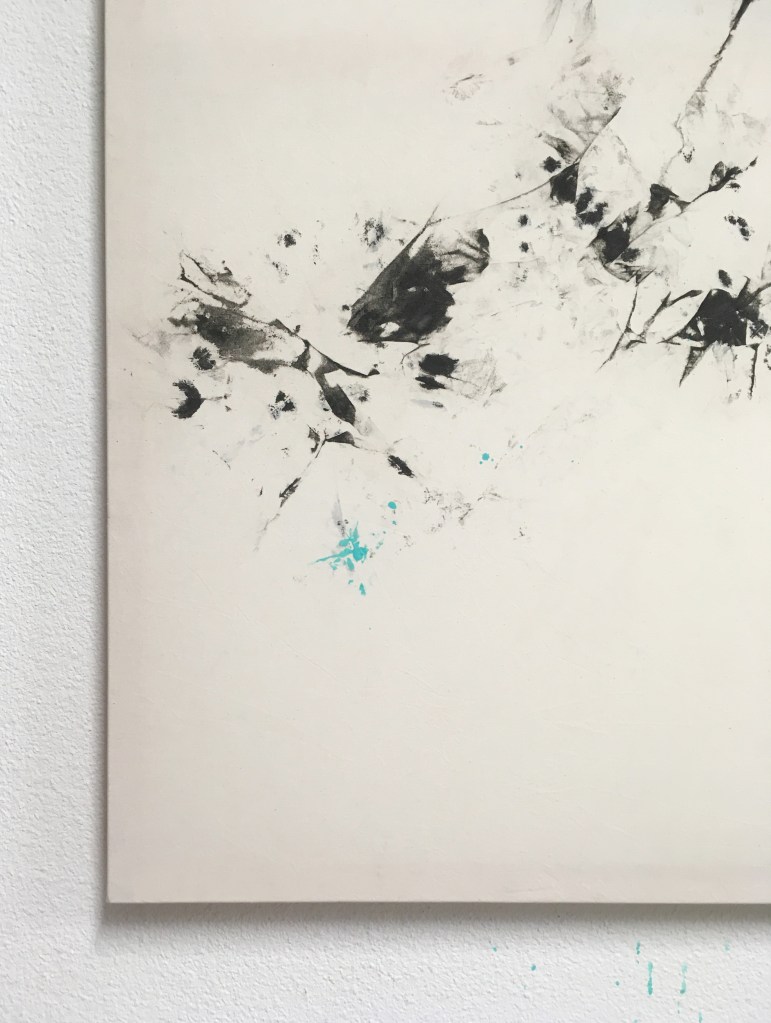
Todo se puede reducir a una mancha, entrecierra los ojos. Huellas del futuro son planos urbanísticos de trazados de ciudades aún inexistentes, pisadas de animales extraños, de inteligencias artificiales. Son paisajes en los que, lo orgánico, ha ganado a lo geométrico y controlado por el hombre, representaciones de ciudades abandonadas en las que la vegetación ahora es protagonista.
El punto y la línea como trazos primarios, ahora también la mancha. Estas obras son un ejercicio de simplificación y las podría haber pintado la naturaleza.
El título rompe la línea espacio temporal a la que estamos acostumbrados y plantea cuestiones como la permanencia y la transitoriedad. Nos lleva a reflexionar sobre la fugacidad de nuestras acciones en el mundo y cómo éstas pueden dejar una marca indeleble en el paisaje futuro. También invita a pensar en la capacidad de la naturaleza para reclamar su espacio y deshacer lo que el hombre ha construido, así como en el papel de la tecnología y la inteligencia artificial en la configuración de los entornos futuros y la ambigüedad de lo que está por venir.
Esta serie invita a considerar el impacto de nuestras acciones a largo plazo en el mundo que habitamos.
What will the landscapes of the future be like? The cities? And when humans are no longer here, what will we have left behind?
Everything can be reduced to a stain, squint your eyes. Footprints of the future are urban plans of city layouts that do not yet exist, footsteps of strange animals, of artificial intelligences. They are landscapes in which the organic has triumphed over the geometric and human-controlled, representations of abandoned cities where vegetation is now the protagonist.
The dot and the line as primary strokes, now also the stain. These works are an exercise in simplification and could have been painted by nature.
The title breaks the space-time line to which we are accustomed and raises questions such as permanence and transience. It leads us to reflect on the fleetingness of our actions in the world and how they can leave an indelible mark on the future landscape. It also invites us to think about the ability of nature to reclaim its space and undo what man has built, as well as the role of technology and artificial intelligence in shaping future environments and the ambiguity of what is to come.
This series invites us to consider the long-term impact of our actions on the world we inhabit.

 PATI BAZTÁN